
What a Technician Usually Finds This Time of Year
Right around the first real cold snap or the first decent rain of the season, the calls start coming in. A homeowner notices the door suddenly groaning on the way up, or it jerks instead of gliding, or the remote works sometimes and not others. Nine times out of ten, the door has spent the last several months baking in dry heat and collecting dust, and now the temperature drop and moisture are exposing problems that were quietly building all summer. The rollers are packed with grit instead of lubricant. The weatherstripping along the bottom is cracked and brittle, no longer sealing anything. The springs, which have been working harder than usual in the heat, are now dealing with cold steel that behaves differently. None of this is dramatic on its own, but together it adds up to a door that's one cold morning away from a real problem.
Why the Seasonal Swing Matters Here
High Desert winters aren't like coastal winters. Days can still be mild, but nights get genuinely cold, and that swing in temperature is hard on a garage door's metal components. Steel springs and tracks contract in the cold, which changes the tension and clearance your door was running at all summer. Add in the dust that's settled into every moving part during the dry months, and you've got a setup for squealing, grinding, or a door that suddenly feels heavier than it should. Then winter rain shows up, often in short, intense bursts rather than steady drizzle, and any gaps in your weatherstripping let water and wind straight into the garage.
Check the Weatherstripping First
This is the cheapest fix with the biggest payoff. Run your hand along the bottom seal and the side stops. If it's stiff, cracked, or pulling away from the door, it's not doing its job anymore. Summer sun and heat dry these seals out faster than people expect, and by fall they're often ready to fail right when you need them most. Replacing the bottom seal is usually a straightforward job, and it keeps wind-driven rain, dust, and cold air from working their way into the garage.
Clear Out the Dust Before It Turns to Grime
Dry seasons leave a fine layer of dust on tracks, rollers, and hinges. On its own it's annoying; mixed with the lubricant that's already on those parts, it turns into a gritty paste that grinds down metal instead of protecting it. Before the rain starts, wipe down the tracks with a dry cloth, then apply a silicone-based lubricant to the rollers, hinges, and springs. Avoid heavy grease, which just collects more dust and makes the problem worse next season. Also give the track a visual check for buildup or debris that could cause the door to bind or run off track when the motor is working harder in cold weather.
Springs Need Attention Before They Fail
Garage door springs are under constant tension, and that tension shifts with temperature. A spring that was holding up fine through 100-degree days can behave differently once nights drop into the 30s and 40s. If you've noticed the door feels heavier when lifted manually, or the opener strains and makes a louder motor noise than usual, that's often a spring losing its proper tension rather than a motor problem. Springs are also simply more likely to snap in cold weather because the metal is less flexible. This isn't a DIY repair — the tension involved can cause serious injury — but it is something worth having checked before winter rather than after a spring lets go on a cold morning.
Don't Skip the Opener and Sensors
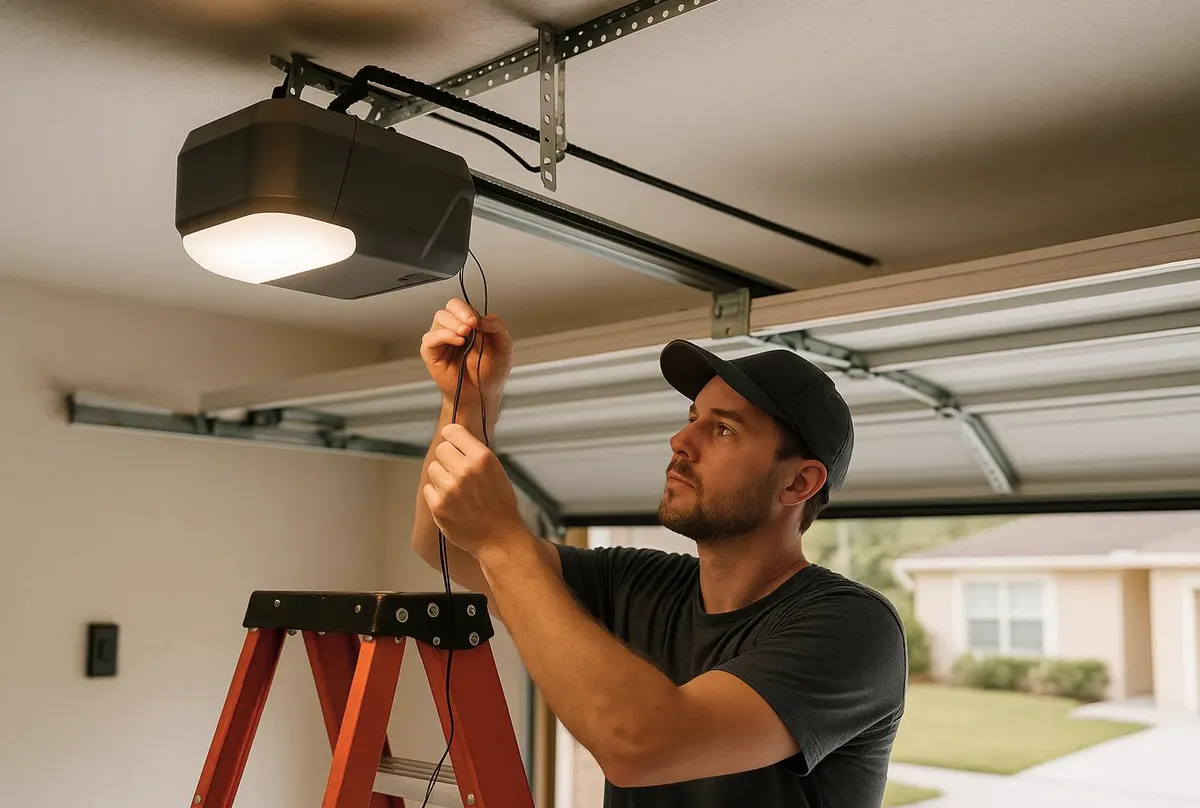
Cold weather is tough on batteries, both in wall-mounted keypads and remote controls, so replace them now rather than waiting for a dead remote in the rain. While you're at it, check that the safety sensors near the bottom of the tracks are clean and properly aligned — dust from summer can knock them slightly out of position, and a misaligned sensor will cause the door to reverse or refuse to close, which is especially frustrating during a downpour.
Panels, Gaps, and Older Housing
If your home has gone through seismic retrofitting, it's worth having someone check that the garage door opening and framing haven't shifted slightly, since even small movement can throw off panel alignment or create new gaps for water and wind to get through. Look over the panels themselves for dents or warping that could let moisture seep in once the rain starts. A door that's slightly out of square will only get worse once wet weather adds swelling and expansion to the mix.
When to Call Adelanto Garage Door Service
If your door is making new noises, feels unusually heavy, or the weatherstripping is too far gone to seal properly, it's worth getting ahead of it before the rain makes small issues worse. We handle Garage Door Maintenance & Tune-Up visits that cover lubrication, track alignment, and hardware checks, and we also handle Garage Door Spring Repair when tension has shifted or a spring is showing wear. Catching these things now is a lot less disruptive than dealing with a stuck or broken door during a storm.
If you're anywhere in Adelanto, Victorville, Hesperia, Apple Valley, Oro Grande, Phelan, Helendale, or Lucerne Valley and want your garage door ready before winter weather arrives, give Adelanto Garage Door Service a call. We'll get it sorted before the rain does.